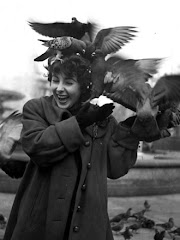
Poor pigeons....shot when they allegedly got in the way; and in a separate incident, used by man for illegal prison activities... two incidents that occured within a few days of one another. One cannot help but feel sympathy for the poor species which man cannot leave alone to exist in peace.
News from BirdChannel.com
Pigeons Make Headlines at Wimbledon, Brazilian Prison
Birds shot, used for smuggling in separate incidents
By Katie Ingmire
Posted: July 11, 2008, 5 a.m. EDT
Pigeons might be ubiquitous in urban areas, but they remain largely absent from mentions in news stories. Recent events at the Wimbledon tennis tournament and a Brazilian prison, however, prove pigeons can make the headlines.
Wimbledon pigeon shooting draws ire from animal activists
Animal rights activists were up in arms last month after marksmen shot pigeons that were distracting players on Centre Court at Wimbledon.
According to an article published June 24, 2008 by Reuters news service, the All England Club hired two hawks to frighten away dive-bombing pigeons during the tennis tournament. Wimbledon called in marksmen after the hawks couldn’t deter the pigeons from the open-air media restaurant and players’ lawn.
Nick Kester, press secretary for the Hawk Board, a body representing all falconers in the United Kingdom, said the hawks might not have been able to scare the pigeons away because pigeons get used to bird-scaring devices, such as falcons and regular explosions.
“As the hawk cannot be flown whilst the tennis match is in progress, then there is no deterrent,” Kester said. “Thus, the more persistent pigeons will return.”
The reaction from Wimbledon came after bird droppings on restaurant tables were thought to pose a health risk, the article said.
Anna Dove, who writes the blog “People for Pigeons,” said she has received many comments pertaining to the Wimbledon incident. She said not one comment supported shooting the pigeons.
“When is any sport more important than a bird?” Dove questioned. “The birds aren’t dangerous … (Wimbledon) should have allowed the birds to stay there.”
Prison Pigeons Found Smuggling Drugs, Phones
A recent incident at a Brazilian prison gives new meaning to the term “pack rat.”
Pigeons, which often receive the unfortunate label of “rats with wings,” were found smuggling drugs and cell phones into the prison in Marilia, Sao Paulo state, according to a June 25 article published by Reuters news service.
Officials uncovered the reason behind the prison’s steep increase in the two contraband items when guards noticed some pigeons struggling to stay in the air. Inmates had been training the pigeons to bring in drugs and phones using pouches on the birds’ backs, the article said.
Prison officials said the pigeons lived on the jail’s roof, also the location where the pigeons delivered the goods. According to the article, the prisoners would take the items delivered onto the roof, then use friends and family to smuggle the pigeons out again.
Saturday, July 12, 2008


Thursday, July 3, 2008
Pigeon Netter Netted
by Erik Baard
(see original article here)
One of the stupider “sports” people have come up with is pigeon shooting, where the birds are released from boxes into the line of yahoos’ ready fire. In a 1902 debate over a bill banning the sport from New York, a state senator compared that lack of humanity and sportsman-like behavior to shutting a doe up in a barn and then blasting her as she ran out the open door.
As nearby as Pennsylvania the practice persists, and New York City birds are being stolen to supply the madness. Fortunately, In Defense of Animals is part of the vanguard to stop it. This week the group conferred its first $2,500 award for information leading to the arrest and conviction of a person netting pigeons, also known as rock doves, in NYC. The recipient was Desi Stewart, a street sweeper with the Doe Fund. He spotted Brooklyn resident Isaac Gonzalez spreading seed and netting many pigeons on the Upper East Side of Manhattan. New York State Department of Environmental Conservation officer arrested Gonzalez, who pleaded guilty in Manhattan Criminal Court on June 26, 2008.
It’s a shame Gonzalez didn’t go to prison, if only because we’ll miss the small ironic pleasure of letting him know of his idiocy in trapping for deathly amusement birds whose intelligence might have made them useful allies in alleviating the sufferings of confinement. Kindred criminal spirits in Brazil, at least, were smart enough to attempt to employ the birds as jailhouse smugglers, complete with little pigeon backpacks!
Pigeons have a growing fan base outside “the clink” (is my mother the only person who still uses that expression?) too. National Pigeon Day was Friday the 13th in June, appropriately enough for such a besotted bird. In Defense of Animals, the United Federation of Teachers Humane Education Committee, the New York Bird Club, and luminaries ate pigeon-shaped cookies…and perhaps scandalously snuck a few crumbs to their avian honorees. The contributions of this species, including astonishing heroics in war, rescue, and acts of touching personal loyalty were recounted.
City Councilman Tony Avella, who’s taken the lead on a number of animal rights issues, shared a moving observation. “They are often a city child’s first contact with nature and an elderly person’s only friends,” he said.
One might wonder why there isn’t a greater effort to control pigeon populations, for fear that they might crowd out other, indigenous species. To understand how little worry ecologists have in this regard, here’s a simple exercise: plant your own lush garden or grove of indigenous plants and trees and wait for the pigeons to show up. Or simply visualize the trees on your block being filled with pigeons. It simply won’t happen. The “rock dove” species feeds on the ground and prefers barren areas much like its ancestral cliff sides in Asia Minor. In other words, buildings and asphalt. Not that city life is kind to pigeons. In the wild they live about 14 years, but typically reach only two in urban areas. They do, however, breed a lot more.
If you’d like to get involved in the responsible care and control of pigeons in the city, try volunteering for Pigeon Watch. And remember, if you witness a pigeon netting in the five boroughs of New York City, call New York State DEC Officer Joseph Pane at 718-482-4941. If you need help in rescuing a pigeon of any age or condition, please visit New York City Pigeon Rescue Central. For the simple enjoyment of learning more about this species, one great place to start is Andrew Blechman’s book, Pigeons, which he calls “the world’s most revered and reviled bird.”
All this brings to mind that we’re at a sad centennial: it was in 1908 that zookeepers posted a $1000 reward (more than $23,000 in today’s dollars) for fertile, wild passenger pigeons. That awakening to the crisis was too late and the reward was never collected. Over-hunting and habitat destruction wiped out that species, which once filled North American skies in flocks of billions. Martha, the last of her kind, died in captivity in 1914. I’ll write more about this missing species of pigeons in coming weeks.
(see original article here)
One of the stupider “sports” people have come up with is pigeon shooting, where the birds are released from boxes into the line of yahoos’ ready fire. In a 1902 debate over a bill banning the sport from New York, a state senator compared that lack of humanity and sportsman-like behavior to shutting a doe up in a barn and then blasting her as she ran out the open door.
As nearby as Pennsylvania the practice persists, and New York City birds are being stolen to supply the madness. Fortunately, In Defense of Animals is part of the vanguard to stop it. This week the group conferred its first $2,500 award for information leading to the arrest and conviction of a person netting pigeons, also known as rock doves, in NYC. The recipient was Desi Stewart, a street sweeper with the Doe Fund. He spotted Brooklyn resident Isaac Gonzalez spreading seed and netting many pigeons on the Upper East Side of Manhattan. New York State Department of Environmental Conservation officer arrested Gonzalez, who pleaded guilty in Manhattan Criminal Court on June 26, 2008.
It’s a shame Gonzalez didn’t go to prison, if only because we’ll miss the small ironic pleasure of letting him know of his idiocy in trapping for deathly amusement birds whose intelligence might have made them useful allies in alleviating the sufferings of confinement. Kindred criminal spirits in Brazil, at least, were smart enough to attempt to employ the birds as jailhouse smugglers, complete with little pigeon backpacks!
Pigeons have a growing fan base outside “the clink” (is my mother the only person who still uses that expression?) too. National Pigeon Day was Friday the 13th in June, appropriately enough for such a besotted bird. In Defense of Animals, the United Federation of Teachers Humane Education Committee, the New York Bird Club, and luminaries ate pigeon-shaped cookies…and perhaps scandalously snuck a few crumbs to their avian honorees. The contributions of this species, including astonishing heroics in war, rescue, and acts of touching personal loyalty were recounted.
City Councilman Tony Avella, who’s taken the lead on a number of animal rights issues, shared a moving observation. “They are often a city child’s first contact with nature and an elderly person’s only friends,” he said.
One might wonder why there isn’t a greater effort to control pigeon populations, for fear that they might crowd out other, indigenous species. To understand how little worry ecologists have in this regard, here’s a simple exercise: plant your own lush garden or grove of indigenous plants and trees and wait for the pigeons to show up. Or simply visualize the trees on your block being filled with pigeons. It simply won’t happen. The “rock dove” species feeds on the ground and prefers barren areas much like its ancestral cliff sides in Asia Minor. In other words, buildings and asphalt. Not that city life is kind to pigeons. In the wild they live about 14 years, but typically reach only two in urban areas. They do, however, breed a lot more.
If you’d like to get involved in the responsible care and control of pigeons in the city, try volunteering for Pigeon Watch. And remember, if you witness a pigeon netting in the five boroughs of New York City, call New York State DEC Officer Joseph Pane at 718-482-4941. If you need help in rescuing a pigeon of any age or condition, please visit New York City Pigeon Rescue Central. For the simple enjoyment of learning more about this species, one great place to start is Andrew Blechman’s book, Pigeons, which he calls “the world’s most revered and reviled bird.”
All this brings to mind that we’re at a sad centennial: it was in 1908 that zookeepers posted a $1000 reward (more than $23,000 in today’s dollars) for fertile, wild passenger pigeons. That awakening to the crisis was too late and the reward was never collected. Over-hunting and habitat destruction wiped out that species, which once filled North American skies in flocks of billions. Martha, the last of her kind, died in captivity in 1914. I’ll write more about this missing species of pigeons in coming weeks.
Saturday, June 28, 2008
Pigeon King Bankruptcy Leaves Birds in Limbo
Latest developments
Pigeon King Bankruptcy Leaves Birds in Limbo
Submitted by Editor on Fri, 06/27/2008 - 10:51am.
Lancaster Farming
Chris Torres
Staff Writer
Information is still sketchy on what will happen to thousands of pigeons in limbo as a result of the bankruptcy of Pigeon King International last week.
The company, which sold expensive pigeon breeding contracts to prospective buyers, filed for bankruptcy in Canada, with its controversial owner, Arlan Galbraith, declaring the company "dead."
Thousands of producers throughout Canada and the U.S., including many in Pennsylvania, are now left with hundreds if not thousands of pigeons they will have to either sell or destroy as a result of the filing. Many others have likely lost thousands of dollars as a result of their investments in the company.
Live bird markets in Pennsylvania have been inundated with calls from producers who want to get rid of their pigeons.
"We’ve been overwhelmed," said Lisa Laucks of Gingrich Animal Supply, Fredericksburg, Pa. She said the company has gotten requests to sell more than 20,000 pigeons to the live bird market. "There are way too many out there," she said.
The company sold multi-year contracts to prospective investors, some in the range of $250,000 or more, for the right to raise pigeons on the farm with the promise they would be paid for their offspring. The company stated it was stocking pigeons for the lucrative squab market and even trademarked a company, Hinterland Squabs, with the hopes of entering into the market.
But critics, including one former salesman for Pigeon King, claimed the company was operating a "Ponzi" scheme, recruiting new investors to pay off old ones, because they didn’t have a clear market for the birds.
Laucks said many of the pigeons she has seen lack the quality and size to be sold into the squab market.
"They are poor quality pigeons," she said. "The information (Galbraith) gave to producers about selling them as squab was not right."
A handful of states, including Iowa, Maryland and Washington, banned the company from doing business in their states.
The Waterloo Regional Police Department in Canada has opened up an inquiry into the company’s dealings.
But even in the face of bankruptcy, Galbraith defended his business practices in a letter sent out to producers last week. He claims the company was in good financial shape, paying out more than $12 million to purchase pigeons from its contract producers in 2007. He also claimed the pigeon business gave him strength in his fight against Hodgkin’s lymphoma, a form of cancer.
He blamed many factors for the company’s downfall, including the weakening economy, high feed costs and increased building costs.
But he placed most of the blame in the hands of his critics, describing them as "fear mongers" and claiming they prevented the company from recruiting new investors.
"Had the fear mongers not targeted us, we would still be a thriving company establishing the first of several squab processing plants. Instead we have been reduced to ashes by fear. Fear is the strongest weapon in the world and it has been used since the beginning of time to manipulate and control people," Galbraith wrote in his letter.
He added that producers are free to do whatever they want with their pigeons and that a bankruptcy trustee has taken over the company’s dealings.
"This means my hands are now tied and that the trustee is responsible for everything," Galbraith wrote.
Apparently, not all of the company’s producers received his letter.
Robert Leister of Wellsboro, Pa., said Monday he was shocked to learn the company filed for bankruptcy. He had just ordered supplies from the company and was expecting a shipment any day. He even received the company’s latest newsletter, which contained a description of a slaughterhouse they were planning on building.
Leister spent $10,000 on 100 pairs of pigeons and thousands more on renovating a building to house the birds. He said the company honored the contract, but claims he has not made enough money to cover his initial investment. Now, he is left with hundreds of pigeons he doesn’t what to do with.
"I guess there will be a lot of pigeons flying around," Leister said.
Noah Peachey, a Plain Sect farmer from Belleville, Pa., said he knows many other producers in his community that made investments in the company. Five of his nephews bought birds from Pigeon King, all of whom, he said, have no idea what they will do now.
"There are people that are very devastated," Peachey said. "What can you do? We tried to warn them."
According to Dr. David Griswold, acting executive director of the state’s Animal Health and Diagnostic Commission, producers can legally incinerate, render or bury their animals, so long as they do it in a "humane fashion."
Griswold said pigeons carry few diseases and are extremely resistance to avian flu.
Chris Ryder, spokesperson for the Pennsylvania Department of Agriculture, said there are at least six markets in the state exclusively for live birds, all of which are located in the Philadelphia area, that could take the pigeons. But he added the markets can only handle between 200 and 600 birds at a time.
Ryder said there are also other markets in the state that could possibly take some of the pigeons.
Source: Lancaster Farming
Pigeon King Bankruptcy Leaves Birds in Limbo
Submitted by Editor on Fri, 06/27/2008 - 10:51am.
Lancaster Farming
Chris Torres
Staff Writer
Information is still sketchy on what will happen to thousands of pigeons in limbo as a result of the bankruptcy of Pigeon King International last week.
The company, which sold expensive pigeon breeding contracts to prospective buyers, filed for bankruptcy in Canada, with its controversial owner, Arlan Galbraith, declaring the company "dead."
Thousands of producers throughout Canada and the U.S., including many in Pennsylvania, are now left with hundreds if not thousands of pigeons they will have to either sell or destroy as a result of the filing. Many others have likely lost thousands of dollars as a result of their investments in the company.
Live bird markets in Pennsylvania have been inundated with calls from producers who want to get rid of their pigeons.
"We’ve been overwhelmed," said Lisa Laucks of Gingrich Animal Supply, Fredericksburg, Pa. She said the company has gotten requests to sell more than 20,000 pigeons to the live bird market. "There are way too many out there," she said.
The company sold multi-year contracts to prospective investors, some in the range of $250,000 or more, for the right to raise pigeons on the farm with the promise they would be paid for their offspring. The company stated it was stocking pigeons for the lucrative squab market and even trademarked a company, Hinterland Squabs, with the hopes of entering into the market.
But critics, including one former salesman for Pigeon King, claimed the company was operating a "Ponzi" scheme, recruiting new investors to pay off old ones, because they didn’t have a clear market for the birds.
Laucks said many of the pigeons she has seen lack the quality and size to be sold into the squab market.
"They are poor quality pigeons," she said. "The information (Galbraith) gave to producers about selling them as squab was not right."
A handful of states, including Iowa, Maryland and Washington, banned the company from doing business in their states.
The Waterloo Regional Police Department in Canada has opened up an inquiry into the company’s dealings.
But even in the face of bankruptcy, Galbraith defended his business practices in a letter sent out to producers last week. He claims the company was in good financial shape, paying out more than $12 million to purchase pigeons from its contract producers in 2007. He also claimed the pigeon business gave him strength in his fight against Hodgkin’s lymphoma, a form of cancer.
He blamed many factors for the company’s downfall, including the weakening economy, high feed costs and increased building costs.
But he placed most of the blame in the hands of his critics, describing them as "fear mongers" and claiming they prevented the company from recruiting new investors.
"Had the fear mongers not targeted us, we would still be a thriving company establishing the first of several squab processing plants. Instead we have been reduced to ashes by fear. Fear is the strongest weapon in the world and it has been used since the beginning of time to manipulate and control people," Galbraith wrote in his letter.
He added that producers are free to do whatever they want with their pigeons and that a bankruptcy trustee has taken over the company’s dealings.
"This means my hands are now tied and that the trustee is responsible for everything," Galbraith wrote.
Apparently, not all of the company’s producers received his letter.
Robert Leister of Wellsboro, Pa., said Monday he was shocked to learn the company filed for bankruptcy. He had just ordered supplies from the company and was expecting a shipment any day. He even received the company’s latest newsletter, which contained a description of a slaughterhouse they were planning on building.
Leister spent $10,000 on 100 pairs of pigeons and thousands more on renovating a building to house the birds. He said the company honored the contract, but claims he has not made enough money to cover his initial investment. Now, he is left with hundreds of pigeons he doesn’t what to do with.
"I guess there will be a lot of pigeons flying around," Leister said.
Noah Peachey, a Plain Sect farmer from Belleville, Pa., said he knows many other producers in his community that made investments in the company. Five of his nephews bought birds from Pigeon King, all of whom, he said, have no idea what they will do now.
"There are people that are very devastated," Peachey said. "What can you do? We tried to warn them."
According to Dr. David Griswold, acting executive director of the state’s Animal Health and Diagnostic Commission, producers can legally incinerate, render or bury their animals, so long as they do it in a "humane fashion."
Griswold said pigeons carry few diseases and are extremely resistance to avian flu.
Chris Ryder, spokesperson for the Pennsylvania Department of Agriculture, said there are at least six markets in the state exclusively for live birds, all of which are located in the Philadelphia area, that could take the pigeons. But he added the markets can only handle between 200 and 600 birds at a time.
Ryder said there are also other markets in the state that could possibly take some of the pigeons.
Source: Lancaster Farming
Wednesday, June 25, 2008
Wimbledon Uses Marksmen to Shoot Pigeons
Wimbledon under fire for pigeon cull
Jun 24, 1:03 pm EDT
LONDON, June 24 (Reuters) -
Wimbledon came under fire from animal activists on Tuesday for using marksmen to shoot down dive-bombing pigeons.
The tournament employs two hawks to scare away pigeons who had become a pest swooping down on Centre Court and distracting players in the middle of tense matches.
But the hawks failed to keep the pigeons away from the players’ lawn and the open-air media restaurant so marksmen were called in.
“The hawks are our first line of deterrent, and by and large they do the job,” Wimbledon spokesman Johnny Perkins said.
“But unfortunately there were one or two areas where the hawks didn’t deter the pigeons, so it was deemed necessary to take a harder approach,” he explained.
The marksmen were summoned by Wimbledon as pigeon droppings on the restaurant tables were thought to be a health hazard.
The decision to call in the marksmen was condemned as “cruel and illegal behaviour” by People for the Ethical Treatment of Animals (PETA) which complained to the tournament organisers and the police.
“Since the use of marksmen to kill pigeons appears to have been carried out as a first, rather than a last resort, and not out of a concern for public health, but rather because the animals were deemed inconvenient by players, you appear to be in clear violation of the law,” PETA vice-president Bruce Friedrich said.
(Reporting by Paul Majendie, Editing by Clare Lovell)
Jun 24, 1:03 pm EDT
LONDON, June 24 (Reuters) -
Wimbledon came under fire from animal activists on Tuesday for using marksmen to shoot down dive-bombing pigeons.
The tournament employs two hawks to scare away pigeons who had become a pest swooping down on Centre Court and distracting players in the middle of tense matches.
But the hawks failed to keep the pigeons away from the players’ lawn and the open-air media restaurant so marksmen were called in.
“The hawks are our first line of deterrent, and by and large they do the job,” Wimbledon spokesman Johnny Perkins said.
“But unfortunately there were one or two areas where the hawks didn’t deter the pigeons, so it was deemed necessary to take a harder approach,” he explained.
The marksmen were summoned by Wimbledon as pigeon droppings on the restaurant tables were thought to be a health hazard.
The decision to call in the marksmen was condemned as “cruel and illegal behaviour” by People for the Ethical Treatment of Animals (PETA) which complained to the tournament organisers and the police.
“Since the use of marksmen to kill pigeons appears to have been carried out as a first, rather than a last resort, and not out of a concern for public health, but rather because the animals were deemed inconvenient by players, you appear to be in clear violation of the law,” PETA vice-president Bruce Friedrich said.
(Reporting by Paul Majendie, Editing by Clare Lovell)
Tuesday, June 17, 2008
Pigeons Show Superior Self-recognition Abilities
Pigeons Show Superior Self-recognition Abilities To Three Year Old Humans
Source: Science Daily
Keio University scientists have shown that pigeons are able to discriminate video images of themselves even with a 5-7 second delay, thus having self-cognitive abilities higher than 3-year-old children who have difficulty recognizing their self-image with only a 2 second delay.
Keio University scientists have shown that pigeons are able to discriminate video images of themselves even with a 5-7 second delay, thus having self-cognitive abilities higher than 3-year-old children who have difficulty recognizing their self-image with only a 2 second delay.
Prof. Shigeru Watanabe of the Graduate School of Human Relations of Keio University and Tsukuba University graduate student Kohji Toda trained pigeons to discriminate real-time self-image using mirrors as well as videotaped self-image, and proved that pigeons can recognize video images that reflect their movements as self-image.
Self-recognition is found in large primates such as chimpanzees, and recent findings show that dolphins and elephants also have such intelligence. Proving that pigeons also have this ability show that such high intelligence as self-recognition can be seen in various animals, and are not limited to primates and dolphins that have large brains.
Experimental method and results
The pigeon was trained to discriminate two types of video images in the following method. First, live video images of the present self (A) and recorded video images of the pigeon that moves differently from the present self (B) are shown. When the pigeon learns to discriminate these two images, the video image of (A) is shown with a temporal delay, so that the monitor shows the image of the pigeon a few seconds before. If the pigeon remembers its own movements, it can recognize it as self-image even with the delay.
The pigeon could discriminate (A) with a few seconds delay as something different from (B). This shows that the pigeon can differentiate the present self-image and the recorded self-image of the past, which means that the pigeon has self-cognitive abilities. Video image (A) matches with the movement of itself, whereas (B) does not. Being able to discriminate the two means that the pigeon understands the difference between movements of itself and movements of the taped image. In this experiment, movements of the pigeon itself are in question instead of the mark of Gallup’s mark test (see 2-(1) below for explanation). When there is a temporal delay in the image of the present self, the longer the delay, the more pigeon’s discrimination was disrupted, and this also shows that the pigeon discriminates the video images using its own movements. The important thing is whether it understands the difference between movements in the video image that match with itself and movements in the video image that don’t.
Method of testing self recognition on animals
(1) Gallup’s mirror test (self-recognition test)
The self-recognition test on animals using mirrors was developed by psychology Prof. Gordon Gallup Jr. at the State University of New York, Albany. His papers released in 1970 in the “Science” magazine explaining that chimpanzees have abilities for self-recognition attracted attention. This test is known as the first to test self-recognition on animals. He anesthetized chimpanzees and then marked their faces. When the chimpanzees were awakened, they were confronted with a mirror and they touched the corresponding marked region of their own faces. Most tests of self-recognition are a variation of the Gallup test, and are used to assess self-recognition in a wide variety of species. It is also called the mark test, or the rouge test.
(2) Assessment of self-recognition on pigeons
Self-recognition can be assessed with cross-modality matching. A typical example of cross-modality matching is waving your hand when you see yourself in a video image. With a mirror image or video image of oneself, when information of the propriocepter (how the arms and legs of oneself are moving) and visual information of oneself correlate, this can be considered self-recognition. The Gallup’s mark test is based on the precondition that the subject can touch itself. Unless the subject touches itself, it cannot be proved that it has abilities for self-recognition. However, the test conducted on pigeons is more advanced, as it is based on how the pigeons move, and by memorizing the shown images, pigeons proved that they have self-cognitive abilities.
Self-cognitive abilities tested in pigeons are higher than that of 3-year olds
Through various experiments, it is known that pigeons have great visual cognitive abilities. For example, a research at Harvard University proved that pigeons could discriminate people photographs from others. At Prof. Shigeru Watanabe’s laboratory, pigeons could discriminate paintings of a certain painter (such as Van Gogh) from another painter (such as Chagall).
Furthermore, pigeons could discriminate other pigeons individually, and also discriminate stimulated pigeons that were given stimulant drugs from none. In this experiment, pigeons could discriminate video images that reflect their movements even with a 5-7 second delay from video images that don’t reflect their movements. This ability is higher than an average 3-year-olds of humans. According to a research by Prof. Hiraki of the University of Tokyo, 3-year-olds have difficulty recognizing their self-image with only a 2 second delay.
--------------------------------------------------------------------------------
Journal reference:
Toda et al. Discrimination of moving video images of self by pigeons (Columba livia). Animal Cognition, 2008 DOI: 10.1007/s10071-008-0161-4
Adapted from materials provided by Keio University.
Need to cite this story in your essay, paper, or report? Use one of the following formats:
APA
MLA
Keio University (2008, June 14). Pigeons Show Superior Self-recognition Abilities To Three Year Old Humans. ScienceDaily. Retrieved June 17, 2008, from http://www.sciencedaily.com /releases/2008/06/080613145535.htm
Source: Science Daily
Keio University scientists have shown that pigeons are able to discriminate video images of themselves even with a 5-7 second delay, thus having self-cognitive abilities higher than 3-year-old children who have difficulty recognizing their self-image with only a 2 second delay.
Keio University scientists have shown that pigeons are able to discriminate video images of themselves even with a 5-7 second delay, thus having self-cognitive abilities higher than 3-year-old children who have difficulty recognizing their self-image with only a 2 second delay.
Prof. Shigeru Watanabe of the Graduate School of Human Relations of Keio University and Tsukuba University graduate student Kohji Toda trained pigeons to discriminate real-time self-image using mirrors as well as videotaped self-image, and proved that pigeons can recognize video images that reflect their movements as self-image.
Self-recognition is found in large primates such as chimpanzees, and recent findings show that dolphins and elephants also have such intelligence. Proving that pigeons also have this ability show that such high intelligence as self-recognition can be seen in various animals, and are not limited to primates and dolphins that have large brains.
Experimental method and results
The pigeon was trained to discriminate two types of video images in the following method. First, live video images of the present self (A) and recorded video images of the pigeon that moves differently from the present self (B) are shown. When the pigeon learns to discriminate these two images, the video image of (A) is shown with a temporal delay, so that the monitor shows the image of the pigeon a few seconds before. If the pigeon remembers its own movements, it can recognize it as self-image even with the delay.
The pigeon could discriminate (A) with a few seconds delay as something different from (B). This shows that the pigeon can differentiate the present self-image and the recorded self-image of the past, which means that the pigeon has self-cognitive abilities. Video image (A) matches with the movement of itself, whereas (B) does not. Being able to discriminate the two means that the pigeon understands the difference between movements of itself and movements of the taped image. In this experiment, movements of the pigeon itself are in question instead of the mark of Gallup’s mark test (see 2-(1) below for explanation). When there is a temporal delay in the image of the present self, the longer the delay, the more pigeon’s discrimination was disrupted, and this also shows that the pigeon discriminates the video images using its own movements. The important thing is whether it understands the difference between movements in the video image that match with itself and movements in the video image that don’t.
Method of testing self recognition on animals
(1) Gallup’s mirror test (self-recognition test)
The self-recognition test on animals using mirrors was developed by psychology Prof. Gordon Gallup Jr. at the State University of New York, Albany. His papers released in 1970 in the “Science” magazine explaining that chimpanzees have abilities for self-recognition attracted attention. This test is known as the first to test self-recognition on animals. He anesthetized chimpanzees and then marked their faces. When the chimpanzees were awakened, they were confronted with a mirror and they touched the corresponding marked region of their own faces. Most tests of self-recognition are a variation of the Gallup test, and are used to assess self-recognition in a wide variety of species. It is also called the mark test, or the rouge test.
(2) Assessment of self-recognition on pigeons
Self-recognition can be assessed with cross-modality matching. A typical example of cross-modality matching is waving your hand when you see yourself in a video image. With a mirror image or video image of oneself, when information of the propriocepter (how the arms and legs of oneself are moving) and visual information of oneself correlate, this can be considered self-recognition. The Gallup’s mark test is based on the precondition that the subject can touch itself. Unless the subject touches itself, it cannot be proved that it has abilities for self-recognition. However, the test conducted on pigeons is more advanced, as it is based on how the pigeons move, and by memorizing the shown images, pigeons proved that they have self-cognitive abilities.
Self-cognitive abilities tested in pigeons are higher than that of 3-year olds
Through various experiments, it is known that pigeons have great visual cognitive abilities. For example, a research at Harvard University proved that pigeons could discriminate people photographs from others. At Prof. Shigeru Watanabe’s laboratory, pigeons could discriminate paintings of a certain painter (such as Van Gogh) from another painter (such as Chagall).
Furthermore, pigeons could discriminate other pigeons individually, and also discriminate stimulated pigeons that were given stimulant drugs from none. In this experiment, pigeons could discriminate video images that reflect their movements even with a 5-7 second delay from video images that don’t reflect their movements. This ability is higher than an average 3-year-olds of humans. According to a research by Prof. Hiraki of the University of Tokyo, 3-year-olds have difficulty recognizing their self-image with only a 2 second delay.
--------------------------------------------------------------------------------
Journal reference:
Toda et al. Discrimination of moving video images of self by pigeons (Columba livia). Animal Cognition, 2008 DOI: 10.1007/s10071-008-0161-4
Adapted from materials provided by Keio University.
Need to cite this story in your essay, paper, or report? Use one of the following formats:
APA
MLA
Keio University (2008, June 14). Pigeons Show Superior Self-recognition Abilities To Three Year Old Humans. ScienceDaily. Retrieved June 17, 2008, from http://www.sciencedaily.com /releases/2008/06/080613145535.htm
Thursday, June 12, 2008
Pigeons Are Smarter Than a Three-Year Old
Pigeons: Smarter than a three-year-old
USA Today
News from Japan that may make parents scramble for their Baby Mozart CDs.
Scientists there have shown pigeons are better at self-recognition than three-year-old children. The birds can also tell a Van Gogh from a Chagall.
Prof. Shigeru Watanabe of Keio University and a grad student found the pigeons were good at identifying their own mug in a video image. The birds could distinguish between video self-images that showed their movements vs. video images that didn't show their movements. That was even with a 5-7 second delay in the video.
The average three-year-old child has trouble recognizing their self-image with just a two-second delay.
We know self-recognition isn't uniquely human. Chimpanzees, dolphins and elephants also have the ability. The pigeon finding suggests an animal doesn't need a large brain to know its own image.
And sorry, kids -- this self-recognition thing? It's for the birds.
By Jess Zielinski
USA Today
News from Japan that may make parents scramble for their Baby Mozart CDs.
Scientists there have shown pigeons are better at self-recognition than three-year-old children. The birds can also tell a Van Gogh from a Chagall.
Prof. Shigeru Watanabe of Keio University and a grad student found the pigeons were good at identifying their own mug in a video image. The birds could distinguish between video self-images that showed their movements vs. video images that didn't show their movements. That was even with a 5-7 second delay in the video.
The average three-year-old child has trouble recognizing their self-image with just a two-second delay.
We know self-recognition isn't uniquely human. Chimpanzees, dolphins and elephants also have the ability. The pigeon finding suggests an animal doesn't need a large brain to know its own image.
And sorry, kids -- this self-recognition thing? It's for the birds.
By Jess Zielinski
Tuesday, June 10, 2008
New York Magazine - Pro-Pigeonism Article
New York Magazine - Pro-Pigeonism Article
Pigeons are nature’s ambassadors to many young New Yorkers. Kids may grow up singing about Old McDonald, imitating farm animals, and reciting their “this little piggy”s, but those animals aren’t city dwellers. What parent hasn’t gotten a whine-free afternoon thanks to some birds and a few crackers? Nonetheless, pigeons have enemies: landlords, the bird-poop-phobic, and Woody Allen, who dubbed them rats with wings. But on June 13, bird lovers will spring to the underdog’s defense by hosting National Pigeon Day in Central Park. “We’re trying to promote a positive image,” says New York Bird Club founder Anna Dove via telephone, rescued canaries tweeting in the background. “There’s such negativity for no reason. They’re harmless, defenseless. They can’t attack; their beak is very soft.” Other members of the crusade against “anti-pigeonism” include Karen Davis of United Poultry Concerns and Valerie Sicignano of In Defense of Animals. The day is equal parts class and party: Kids will learn cool pigeon facts (e.g., how the birds acted as wartime carriers and how they’re smart enough to recognize alphabet letters) as they nibble on pigeon-shape cookies, view pigeon-inspired children’s art, and take part in a candlelight prayer service. (Dove worries there might not even be urban pigeons in five years.) Meanwhile, she urges all New York families to “carry a bit of bread crumbs in your bag, a few seeds to show kindness and respect. The pigeon isn’t a threat or an enemy. It goes along with quality of life to show kindness and compassion to all living things.” That’s a lovely lesson for the children.
6/13, 4 to 8 p.m. Pilgrim Hill in Central Park, enter on Fifth Ave. at 72nd St. (212-369-1293 or nationalpigeonday.com); free.
Pigeons are nature’s ambassadors to many young New Yorkers. Kids may grow up singing about Old McDonald, imitating farm animals, and reciting their “this little piggy”s, but those animals aren’t city dwellers. What parent hasn’t gotten a whine-free afternoon thanks to some birds and a few crackers? Nonetheless, pigeons have enemies: landlords, the bird-poop-phobic, and Woody Allen, who dubbed them rats with wings. But on June 13, bird lovers will spring to the underdog’s defense by hosting National Pigeon Day in Central Park. “We’re trying to promote a positive image,” says New York Bird Club founder Anna Dove via telephone, rescued canaries tweeting in the background. “There’s such negativity for no reason. They’re harmless, defenseless. They can’t attack; their beak is very soft.” Other members of the crusade against “anti-pigeonism” include Karen Davis of United Poultry Concerns and Valerie Sicignano of In Defense of Animals. The day is equal parts class and party: Kids will learn cool pigeon facts (e.g., how the birds acted as wartime carriers and how they’re smart enough to recognize alphabet letters) as they nibble on pigeon-shape cookies, view pigeon-inspired children’s art, and take part in a candlelight prayer service. (Dove worries there might not even be urban pigeons in five years.) Meanwhile, she urges all New York families to “carry a bit of bread crumbs in your bag, a few seeds to show kindness and respect. The pigeon isn’t a threat or an enemy. It goes along with quality of life to show kindness and compassion to all living things.” That’s a lovely lesson for the children.
6/13, 4 to 8 p.m. Pilgrim Hill in Central Park, enter on Fifth Ave. at 72nd St. (212-369-1293 or nationalpigeonday.com); free.
Monday, June 9, 2008
National Pigeon Day - June 13th
Friday, June 13
4 - 8 pm
Pilgrim Hill in Central Park
New York, NY
(enter on northwest corner of 5th Avenue @ E. 72nd Street)
Entertainment, political activism, materials distribution, candlelight prayer service with guitar accompaniment and pigeon shaped cookies. Learn how carrier pigeons Cher Ami, GI Joe and Winkie saved the lives of more than 1,000 men in wartime. Become part of Project Pigeon Watch and have fun learning about our fascinating NYC residents.
Amanda Tree will host and play her music for National Pigeon Day.
Special Guest Joe Franklin
Speakers include:
Council Member Tony Avella, Nellie McKay, In Defense of Animals, Deacon Joseph Dwyer, Janice Fredericks, United Poultry Concerns, Raghav K. Goyal and Ana A. Garcia, Amanda Tree.
The New York Bird Club wishes to thank In Defense of Animals who will provide a banner, Hanna Fushihara Aron who will bake pigeon shaped cookies, God's Creatures Ministry who will provide candles, the United Federation of Teachers Humane Education Committee who will bring Pigeon Watch materials for distribution, all speakers and contributors and all our pigeon friends who advocate on behalf of our beautiful birds.
Guest Speakers and Schedule:
(see blog)
4 - 8 pm
Pilgrim Hill in Central Park
New York, NY
(enter on northwest corner of 5th Avenue @ E. 72nd Street)
Entertainment, political activism, materials distribution, candlelight prayer service with guitar accompaniment and pigeon shaped cookies. Learn how carrier pigeons Cher Ami, GI Joe and Winkie saved the lives of more than 1,000 men in wartime. Become part of Project Pigeon Watch and have fun learning about our fascinating NYC residents.
Amanda Tree will host and play her music for National Pigeon Day.
Special Guest Joe Franklin
Speakers include:
Council Member Tony Avella, Nellie McKay, In Defense of Animals, Deacon Joseph Dwyer, Janice Fredericks, United Poultry Concerns, Raghav K. Goyal and Ana A. Garcia, Amanda Tree.
The New York Bird Club wishes to thank In Defense of Animals who will provide a banner, Hanna Fushihara Aron who will bake pigeon shaped cookies, God's Creatures Ministry who will provide candles, the United Federation of Teachers Humane Education Committee who will bring Pigeon Watch materials for distribution, all speakers and contributors and all our pigeon friends who advocate on behalf of our beautiful birds.
Guest Speakers and Schedule:
(see blog)
Monday, June 2, 2008
Homing Pigeons' Wartime Accomplishments Celebrated on Anniversary of WW1 Battle
Chicago Tribune
Homing pigeons' wartime accomplishments celebrated on anniversary of WWI battle
In Wheaton, enthusiasts tell of birds' role in WWI
By Gerry Smith
Tribune reporter
8:35 PM CDT, May 31, 2008
They're seen mostly as an urban nuisance, filthy birds who frequently defecate on the statues of war heroes, but pigeons still hold a special place in the hearts of veterans.
On Saturday, during the 90th anniversary of the Battle of Cantigny, the first U.S. victory of World War I, homing pigeons were celebrated at Cantigny Park in Wheaton for their pivotal role in protecting soldiers during the war.
As a breeder released homing pigeons into the sky, visitors observed exhibits highlighting the birds' valor in the line of duty.
During wartime, some pigeons were fitted with cameras to take photographs of enemy positions. Their most important role was as messengers, carrying notes that were neatly folded into small canisters attached to their legs.
During World War I, before the two-way radio, field commanders carried carrier pigeons to communicate. The pigeons would instinctively fly back to their home and deliver messages to military planners.
"Some of those birds had to fly across the English Channel," said Bill Mitiu, 56, a member of the Greater Chicago Combine, a group of homing pigeon-keepers.
Perhaps the most famous of the World War I carrier pigeons was named Cher Ami. The bird was credited with saving the lives of about 200 American soldiers in the 77th Infantry Division by delivering messages across enemy lines.
Recent scientific research has found that pigeons are able to navigate hundreds of miles based on smell, disproving prior theories that they used Earth's magnetic field to find their way home.
On Saturday, Mitiu released several pigeons. Some flew from the park in Wheaton to Mitiu's coop in Brookfield, a 20-mile journey that takes them about 20 minutes.
Today, homing pigeons are typically used for racing and sometimes referred to as "race horses of the sky." They are bred in backyard coops and wear a band on each leg—one with an ID number, the other with a computer chip that registers when they cross the finish line.
"They're amazing little athletes," Mitiu said.
But they have an image problem. In response to complaints about feathers and droppings around local coops, the Chicago City Council in 2004 banned raising pigeons in residential areas, making Chicago the largest city in the nation to enact such an ordinance.
The birds receive more respect in Europe, Mitiu said, where residents of some countries still remember the role of pigeons on the battlefield. For example, there are an estimated 60,000 pigeon enthusiasts in Belgium, a nation of 10 million people.
"These birds helped save their lives during wars, and they respect that and recognize that," Mitiu said.
gfsmith@tribune.com
Homing pigeons' wartime accomplishments celebrated on anniversary of WWI battle
In Wheaton, enthusiasts tell of birds' role in WWI
By Gerry Smith
Tribune reporter
8:35 PM CDT, May 31, 2008
They're seen mostly as an urban nuisance, filthy birds who frequently defecate on the statues of war heroes, but pigeons still hold a special place in the hearts of veterans.
On Saturday, during the 90th anniversary of the Battle of Cantigny, the first U.S. victory of World War I, homing pigeons were celebrated at Cantigny Park in Wheaton for their pivotal role in protecting soldiers during the war.
As a breeder released homing pigeons into the sky, visitors observed exhibits highlighting the birds' valor in the line of duty.
During wartime, some pigeons were fitted with cameras to take photographs of enemy positions. Their most important role was as messengers, carrying notes that were neatly folded into small canisters attached to their legs.
During World War I, before the two-way radio, field commanders carried carrier pigeons to communicate. The pigeons would instinctively fly back to their home and deliver messages to military planners.
"Some of those birds had to fly across the English Channel," said Bill Mitiu, 56, a member of the Greater Chicago Combine, a group of homing pigeon-keepers.
Perhaps the most famous of the World War I carrier pigeons was named Cher Ami. The bird was credited with saving the lives of about 200 American soldiers in the 77th Infantry Division by delivering messages across enemy lines.
Recent scientific research has found that pigeons are able to navigate hundreds of miles based on smell, disproving prior theories that they used Earth's magnetic field to find their way home.
On Saturday, Mitiu released several pigeons. Some flew from the park in Wheaton to Mitiu's coop in Brookfield, a 20-mile journey that takes them about 20 minutes.
Today, homing pigeons are typically used for racing and sometimes referred to as "race horses of the sky." They are bred in backyard coops and wear a band on each leg—one with an ID number, the other with a computer chip that registers when they cross the finish line.
"They're amazing little athletes," Mitiu said.
But they have an image problem. In response to complaints about feathers and droppings around local coops, the Chicago City Council in 2004 banned raising pigeons in residential areas, making Chicago the largest city in the nation to enact such an ordinance.
The birds receive more respect in Europe, Mitiu said, where residents of some countries still remember the role of pigeons on the battlefield. For example, there are an estimated 60,000 pigeon enthusiasts in Belgium, a nation of 10 million people.
"These birds helped save their lives during wars, and they respect that and recognize that," Mitiu said.
gfsmith@tribune.com
Monday, May 26, 2008
A Tribute on Memorial Day to our Forgotten Heroes

Pigeons of war
'Mon Cher Ami--that's my dear friend--
In fierce fighting and deep in enemy territory, American pigeons carried life-or-death messages that radio and field phones could not.
This Memorial Day, when we commemorate the men and women who have died in war, we will also take a moment to reflect on how many pigeons and animals have also suffered and died for human military purposes.
Do you know that pigeons saved the lives of thousands of people during World War 1 and World War 11. Medals were bestowed upon the following pigeons for acts of bravery and for saving the lives of thousands of humans.
A complete list of pigeons awarded
Do you know that pigeons saved the lives of thousands of people during World War 1 and World War 11. Medals were bestowed upon the following pigeons for acts of bravery and for saving the lives of thousands of humans.
A complete list of pigeons awarded
"THE DICKEN MEDAL"
NEHU.40.NS.1 - Blue Cheq. Hen "Winkie"
MEPS.43.1263 - Red Cheq. Cock "George"
SURP.41.L.3089 - White Hen "White Vision"
NPS.41.NS.4230 - "Beachbomber"
NPS.42.31066 - Grizzle Cock "Gustav"
NPS.43.94451 - Dark Cheq. Cock "Paddy"
NURP.36.JH.190 - Dark Cheq. Hen "Kenley Lass"
NURP.38.EGU.242 - Red Cheq. Cock "Commando"
NPS.42.NS.44802 - Dark Cheq. Cock "Flying Dutchman"
NURP.40.GVIS.453- Blue Cock "Royal Blue"
NURP.41.A.2164 - "Dutch Coast"
NPS.41.NS.2862 - Blue Cock "Navy Blue"
NPS.42.NS.15125 - Mealy Cock "William of Orange"
NPS.43.29018 - Dark Cheq. Cock "Ruhr Express"
NPS.42.21610 - B.C. Hen "Scotch Lass"
NU.41.HQ.4373 - Blue Cock "Billy"
NURP.39.NRS.144 - Red Cock "Cologne"
NPS.42.36392 - "Maquis"
NPS.42.NS.7542 - 41.BA.2793 - "Broad Arrow"
NURP.39.SDS.39 - "All Alone"
NURP.37.CEN.335 - "Mercury"
NURP.38.
BPC.6 -
DD.43.T.139 -
DDD.43.Q.879 -
NURP.41.
SBC.219 - Cock "Duke of Normandy"
NURP.43.
CC.2418 - B.C. Hen
NURP.40.
WLE.249 - "Mary"
NURP.41.
DHZ.56 - "Tommy"
42.WD.593 - "Princess"USA.
43.SC.6390 - "G.I. Joe"
One can always observe pigeons on pictures with Kamadeva, one of the oldest Hindu love gods. Christian religion tells the story of Noah who sent a pigeon 3 times to look for a dry piece of land.
Greek and Roman history writers quote pigeons. Pigeons informed the home front on victories and defeats of kings and generals.
Pigeons were the newsmen between Iraq and at that time Syria in the 12th century. Sultans built pigeon houses. Belgian and Dutch newspapers depended for a great deal on pigeons for their information.
Napoleon's defeat in the battle of "Waterloo" was reported to England by Nathan Rotschild's pigeons.
From Wartime Hero to Modern-Day Nuisance (snippet: ABC News)
Felder's announcement Monday was somewhat timely, as Nov. 12 was the day we observed Veterans Day, honoring America's wartime heroes. But few remembered that thousands of American and allied forces were saved in World Wars I and II by pigeons. Pigeons?
For centuries, pigeons were used to carry important messages in wartime when communication lines were down, according to Andrew Blechman in his book, "Pigeons: The Fascinating Saga of the World's Most Revered and Reviled Bird."
Blechman recounts one instance of the birds' heroism in the story of the U.S. Army's 77th Division, later known as the Lost Battalion, in World War I. The battalion was trapped behind enemy lines while American troops 25 miles away, unaware of the 77th's position, unleashed a massive artillery attack on them. The desperate soldiers wrote a message: "Our artillery is dropping a barrage on us. For heaven's sake, stop it!" and attached it to their carrier pigeon, Cher Ami.
----------------------
References:
http://en.wikipedia.org/wiki/War_pigeon
http://www.firstworldwar.com/atoz/carrierpigeons.htm http://www.historylearningsite.co.uk/pigeons_and_world_war_one.htm http://www.travelingdogs.com/pigeonsiniraq.html
http://www.pigeoncenter.org/militarypigeons.html
http://www.pigeoncote.com/books/others/wars1.html
http://www.faircountclub.com/faircount_facts_info_world_war.htm
http://www.helpinganimals.com/wildlife_living_with_pigeons.asp
Home of the Heroes
Cher Ami (Dear Friend)
Greek and Roman history writers quote pigeons. Pigeons informed the home front on victories and defeats of kings and generals.
Pigeons were the newsmen between Iraq and at that time Syria in the 12th century. Sultans built pigeon houses. Belgian and Dutch newspapers depended for a great deal on pigeons for their information.
Napoleon's defeat in the battle of "Waterloo" was reported to England by Nathan Rotschild's pigeons.
From Wartime Hero to Modern-Day Nuisance (snippet: ABC News)
Felder's announcement Monday was somewhat timely, as Nov. 12 was the day we observed Veterans Day, honoring America's wartime heroes. But few remembered that thousands of American and allied forces were saved in World Wars I and II by pigeons. Pigeons?
For centuries, pigeons were used to carry important messages in wartime when communication lines were down, according to Andrew Blechman in his book, "Pigeons: The Fascinating Saga of the World's Most Revered and Reviled Bird."
Blechman recounts one instance of the birds' heroism in the story of the U.S. Army's 77th Division, later known as the Lost Battalion, in World War I. The battalion was trapped behind enemy lines while American troops 25 miles away, unaware of the 77th's position, unleashed a massive artillery attack on them. The desperate soldiers wrote a message: "Our artillery is dropping a barrage on us. For heaven's sake, stop it!" and attached it to their carrier pigeon, Cher Ami.
----------------------
References:
http://en.wikipedia.org/wiki/War_pigeon
http://www.firstworldwar.com/atoz/carrierpigeons.htm http://www.historylearningsite.co.uk/pigeons_and_world_war_one.htm http://www.travelingdogs.com/pigeonsiniraq.html
http://www.pigeoncenter.org/militarypigeons.html
http://www.pigeoncote.com/books/others/wars1.html
http://www.faircountclub.com/faircount_facts_info_world_war.htm
http://www.helpinganimals.com/wildlife_living_with_pigeons.asp
Home of the Heroes
Cher Ami (Dear Friend)
The ability to communicate is essential to soldiers in the field. Without communications to their commanders or support units in the rear area, soldiers on the front line can't send messages about their progress, request needed supplies, or call for help when things reach their worst.
During World War I, messages were sometimes transmitted by wire (telegraph of field phone), but two-way radio communications had not yet become available. Sometimes a unit was ordered to attack over a broad and often difficult terrain, making it impossible to string the wire necessary for communications. In these situations, a field commander often carried with him several carrier pigeons.
Pigeons served many purposes during the war, racing through the skies with airplanes, or even being fitted with cameras to take pictures of enemy positions. But one of the most important roles they served it was as messengers. An important message could be written on a piece of paper, then that paper neatly folded and secured in a small canister attached to a pigeon's leg. Once the pigeon was released, it would try to fly to its home back behind the lines, where the message would be read and transmitted to the proper military planners.
During World War I, messages were sometimes transmitted by wire (telegraph of field phone), but two-way radio communications had not yet become available. Sometimes a unit was ordered to attack over a broad and often difficult terrain, making it impossible to string the wire necessary for communications. In these situations, a field commander often carried with him several carrier pigeons.
Pigeons served many purposes during the war, racing through the skies with airplanes, or even being fitted with cameras to take pictures of enemy positions. But one of the most important roles they served it was as messengers. An important message could be written on a piece of paper, then that paper neatly folded and secured in a small canister attached to a pigeon's leg. Once the pigeon was released, it would try to fly to its home back behind the lines, where the message would be read and transmitted to the proper military planners.
The United States Army is divided among several different specialties, the men from each specialty trained for a particular kind of work. Infantrymen are trained to fight on the ground, artillerymen are responsible for the big guns, armor refers to the men who fight in tanks, and the Air Service was the name for the group of soldiers who fought in the air during World War I.
One of the oldest of these groups of soldiers was the members of the U.S. ARMY SIGNAL CORPS. Since the birth of our Nation, it was these men that were responsible for insuring that messages between all units, (including messages to other branches of service like the Navy and Marines), got through. The Army Signal Corps identifies itself by a torch with two crossed flags. These represent SIGNAL FLAGS, a common way that messages were passed using code.
When the United States entered World War I in 1917, the Army Signal Corps was given 600 pigeons for the purpose of passing messages when it couldn't be done by signal flag or field phone. The pigeons were donated by bird breeders in Great Britain, then trained for their jobs by American soldiers.
During the Meuse-Argonne Offensive, the 2-month battle that finally ended World War I, 442 pigeons were used in the area of Verdun to carry hundreds of messages.
This is how the system worked:
When a commander in the field needed to send a message, he first wrote it out on paper, trying to be both brief and yet as detailed as possible. Then he called for one of his Signal Corps officers, who would bring one of the pigeons that went with the soldiers into battle. The message would be put in the capsule on the birds leg, and then the bird would be tossed high in the air to fly home.
The carrier pigeon would fly back to his home coop behind the lines. When he landed, the wires in the coop would sound a bell or buzzer, and another soldier of the Signal Corps would know a message had arrived. He would go to the coop, remove the message from the canister, and then send it by telegraph, field phone or personal messenger, to the right persons.
Carrier pigeons did an important job. It was also very dangerous. If the enemy soldiers were nearby when a pigeon was released, they knew that the bird would be carrying important messages, and tried their best to shoot the pigeon down so the message couldn't be delivered.
Some of these pigeons became quite famous among the infantrymen they worked for. One pigeon named "The Mocker", flew 52 missions before he was wounded. Another was named "President Wilson". He was injured in the last week of the war and it seemed impossible for him to reach his destination. Though he lost his foot, the message got through to save a large group of surrounded American infantrymen.
Cher Ami
Probably the most famous of all the carrier pigeons was one named Cher Ami, two French words meaning "Dear Friend". Cher Ami several months on the front lines during the Fall of 1918. He flew 12 important missions to deliver messages. Perhaps the most important was the message he carried on October 4, 1918.
Mr. Charles Whittlesey was a lawyer in New York, but when the United States called for soldiers to help France regain its freedom, Whittlesey joined the Army and went to Europe to help. He was made the commander of a battalion of soldiers in the 77th Infantry Division, known as "The Liberty Division" because most of the men came from New York and wore a bright blue patch on their shoulders that had on it the STATUE OF LIBERTY.
On October 3, 1918 Major Whittlesey and more than 500 men were trapped in a small depression on the side of the hill. Surrounded by enemy soldiers, many were killed and wounded in the first day. By the second day only a little more than 200 men were still alive or unwounded.
Major Whittlesey sent out several pigeons to tell his commanders where he was, and how bad the trap was. The next afternoon he had only one pigeon left, Cher Ami.
During the afternoon the American Artillery tried to send some protection by firing hundreds of big artillery rounds into the ravine where the Germans surrounded Major Whittlesey and his men. Unfortunately, the American commanders didn't know exactly where the American soldiers were, and started dropping the big shells right on top of them. It was a horrible situation that might have resulted in Major Whittlesey and all his men getting killed--by their own army.
Major Whittlesey called for his last pigeon, Cher Ami. He wrote a quick and simple note, telling the men who directed the artillery guns where the Americans were located and asking them to stop. The note that was put in the canister on Cher Ami's left leg simply said:
"We are along the road parallel to 276.4."Our own artillery is dropping a barrage directly on us."For heaven's sake, stop it."
As Cher Ami tried to fly back home, the Germans saw him rising out of the brush and opened fire. For several minutes, bullets zipped through the air all around him. For a minute it looked like the little pigeon was going to fall, that he wasn't going to make it. The doomed American infantrymen were crushed, their last home was plummeting to earth against a very heavy attack from German bullets.
Somehow Cher Ami managed to spread his wings and start climbing again, higher and higher beyond the range of the enemy guns. The little bird flew 25 miles in only 25 minutes to deliver his message. The shelling stopped, and more than 200 American lives were saved...all because the little bird would never quit trying.
On his last mission, Cher Ami was badly wounded. When he finally reached his coop, he could fly no longer, and the soldier that answered the sound of the bell found the little bird laying on his back, covered in blood. He had been blinded in one eye, and a bullet had hit his breastbone, making a hole the size of a quarter. From that awful hole, hanging by just a few tendons, was the almost severed leg of the brave little bird. Attached to that leg was a silver canister, with the all-important message. Once again, Cher Ami wouldn't quit until he had finished his job.
Cher Ami became the hero of the 77th Infantry Division, and the medics worked long and hard to patch him up. When the French soldiers that the Americans were fighting to help learned they story of Cher Ami's bravery and determination, they gave him one of their own country's great honors. Cher Ami, the brave carrier pigeon was presented a medal called the French Croix de guerre with a palm leaf.
Though the dedicated medics saved Cher Ami's life, they couldn't save his leg. The men of the Division were careful to take care of the little bird that had saved 200 of their friends, and even carved a small wooden leg for him. When Cher Ami was well enough to travel, the little one-legged hero was put on a boat to the United States. The commander of all of the United States Army, the great General John J. Pershing, personally saw Cher Ami off as he departed France.
Back in the United States the story of Cher Ami was told again and again. The little bird was in the newspapers, magazines, and it seemed that everyone knew his name. He became one of the most famous heroes of World War I.
One of the oldest of these groups of soldiers was the members of the U.S. ARMY SIGNAL CORPS. Since the birth of our Nation, it was these men that were responsible for insuring that messages between all units, (including messages to other branches of service like the Navy and Marines), got through. The Army Signal Corps identifies itself by a torch with two crossed flags. These represent SIGNAL FLAGS, a common way that messages were passed using code.
When the United States entered World War I in 1917, the Army Signal Corps was given 600 pigeons for the purpose of passing messages when it couldn't be done by signal flag or field phone. The pigeons were donated by bird breeders in Great Britain, then trained for their jobs by American soldiers.
During the Meuse-Argonne Offensive, the 2-month battle that finally ended World War I, 442 pigeons were used in the area of Verdun to carry hundreds of messages.
This is how the system worked:
When a commander in the field needed to send a message, he first wrote it out on paper, trying to be both brief and yet as detailed as possible. Then he called for one of his Signal Corps officers, who would bring one of the pigeons that went with the soldiers into battle. The message would be put in the capsule on the birds leg, and then the bird would be tossed high in the air to fly home.
The carrier pigeon would fly back to his home coop behind the lines. When he landed, the wires in the coop would sound a bell or buzzer, and another soldier of the Signal Corps would know a message had arrived. He would go to the coop, remove the message from the canister, and then send it by telegraph, field phone or personal messenger, to the right persons.
Carrier pigeons did an important job. It was also very dangerous. If the enemy soldiers were nearby when a pigeon was released, they knew that the bird would be carrying important messages, and tried their best to shoot the pigeon down so the message couldn't be delivered.
Some of these pigeons became quite famous among the infantrymen they worked for. One pigeon named "The Mocker", flew 52 missions before he was wounded. Another was named "President Wilson". He was injured in the last week of the war and it seemed impossible for him to reach his destination. Though he lost his foot, the message got through to save a large group of surrounded American infantrymen.
Cher Ami
Probably the most famous of all the carrier pigeons was one named Cher Ami, two French words meaning "Dear Friend". Cher Ami several months on the front lines during the Fall of 1918. He flew 12 important missions to deliver messages. Perhaps the most important was the message he carried on October 4, 1918.
Mr. Charles Whittlesey was a lawyer in New York, but when the United States called for soldiers to help France regain its freedom, Whittlesey joined the Army and went to Europe to help. He was made the commander of a battalion of soldiers in the 77th Infantry Division, known as "The Liberty Division" because most of the men came from New York and wore a bright blue patch on their shoulders that had on it the STATUE OF LIBERTY.
On October 3, 1918 Major Whittlesey and more than 500 men were trapped in a small depression on the side of the hill. Surrounded by enemy soldiers, many were killed and wounded in the first day. By the second day only a little more than 200 men were still alive or unwounded.
Major Whittlesey sent out several pigeons to tell his commanders where he was, and how bad the trap was. The next afternoon he had only one pigeon left, Cher Ami.
During the afternoon the American Artillery tried to send some protection by firing hundreds of big artillery rounds into the ravine where the Germans surrounded Major Whittlesey and his men. Unfortunately, the American commanders didn't know exactly where the American soldiers were, and started dropping the big shells right on top of them. It was a horrible situation that might have resulted in Major Whittlesey and all his men getting killed--by their own army.
Major Whittlesey called for his last pigeon, Cher Ami. He wrote a quick and simple note, telling the men who directed the artillery guns where the Americans were located and asking them to stop. The note that was put in the canister on Cher Ami's left leg simply said:
"We are along the road parallel to 276.4."Our own artillery is dropping a barrage directly on us."For heaven's sake, stop it."
As Cher Ami tried to fly back home, the Germans saw him rising out of the brush and opened fire. For several minutes, bullets zipped through the air all around him. For a minute it looked like the little pigeon was going to fall, that he wasn't going to make it. The doomed American infantrymen were crushed, their last home was plummeting to earth against a very heavy attack from German bullets.
Somehow Cher Ami managed to spread his wings and start climbing again, higher and higher beyond the range of the enemy guns. The little bird flew 25 miles in only 25 minutes to deliver his message. The shelling stopped, and more than 200 American lives were saved...all because the little bird would never quit trying.
On his last mission, Cher Ami was badly wounded. When he finally reached his coop, he could fly no longer, and the soldier that answered the sound of the bell found the little bird laying on his back, covered in blood. He had been blinded in one eye, and a bullet had hit his breastbone, making a hole the size of a quarter. From that awful hole, hanging by just a few tendons, was the almost severed leg of the brave little bird. Attached to that leg was a silver canister, with the all-important message. Once again, Cher Ami wouldn't quit until he had finished his job.
Cher Ami became the hero of the 77th Infantry Division, and the medics worked long and hard to patch him up. When the French soldiers that the Americans were fighting to help learned they story of Cher Ami's bravery and determination, they gave him one of their own country's great honors. Cher Ami, the brave carrier pigeon was presented a medal called the French Croix de guerre with a palm leaf.
Though the dedicated medics saved Cher Ami's life, they couldn't save his leg. The men of the Division were careful to take care of the little bird that had saved 200 of their friends, and even carved a small wooden leg for him. When Cher Ami was well enough to travel, the little one-legged hero was put on a boat to the United States. The commander of all of the United States Army, the great General John J. Pershing, personally saw Cher Ami off as he departed France.
Back in the United States the story of Cher Ami was told again and again. The little bird was in the newspapers, magazines, and it seemed that everyone knew his name. He became one of the most famous heroes of World War I.
Years after the war a man named Harry Webb Farrington decided to put together a book of poems and short stories about the men and heroes of World War I. When his book was published, it contained a special poem dedicated to Cher Ami:
Cher Ami
by Harry Webb Farrington
Cher Ami, how do you do!
Listen, let me talk to you;
Cher Ami
by Harry Webb Farrington
Cher Ami, how do you do!
Listen, let me talk to you;
I'll not hurt you, don't you see?
Come a little close to me.
Little scrawny blue and white
Come a little close to me.
Little scrawny blue and white
Messenger for men who fight,
Tell me of the deep, red scar,
There, just where no feathers are.
What about your poor left leg?
Tell me, Cher Ami, I beg.
Boys and girls are at a loss,
How you won that Silver Cross.
how do you do! Listen,
What about your poor left leg?
Tell me, Cher Ami, I beg.
Boys and girls are at a loss,
How you won that Silver Cross.
how do you do! Listen,
let me talk to you;
I'll not hurt you, don't you see?
Come a little close to me.
"The finest fun that came to me
I'll not hurt you, don't you see?
Come a little close to me.
"The finest fun that came to me
Was when I went with Whittlesey;
We marched so fast, so far ahead!'
We all are lost,' the keeper said;
'Mon Cher Ami--that's my dear friend--
You are the one we'll have to send;
The whole battalion now is lost,
And you must win at any cost.'
So with the message tied on tight;
I flew up straight with all my might,
Before I got up high enough,
Those watchfull guns began to puff.
Machine-gun bullets came like rain,
You'd think I was an aeroplane;
And when I started to the rear,
I flew up straight with all my might,
Before I got up high enough,
Those watchfull guns began to puff.
Machine-gun bullets came like rain,
You'd think I was an aeroplane;
And when I started to the rear,
My! the shot was coming near!
But on I flew, straight as a bee;
The wind could not catch up with me,
Until I dropped out of the air,
But on I flew, straight as a bee;
The wind could not catch up with me,
Until I dropped out of the air,
Into our own men's camp, so there!"
But, Cher Ami, upon my word,
You modest, modest little bird;
Now don't you know that you forgot?
Tell how your breast and leg were shot.
"Oh, yes, the day we crossed the Meuse,
I flew to Rampont with the news;
But, Cher Ami, upon my word,
You modest, modest little bird;
Now don't you know that you forgot?
Tell how your breast and leg were shot.
"Oh, yes, the day we crossed the Meuse,
I flew to Rampont with the news;
Again the bullets came like hail,
I thought for sure that I should fail.
The bullets buzzed by like a bee,
So close, it almost frightened me;
One struck the feathers of this sail,
I thought for sure that I should fail.
The bullets buzzed by like a bee,
So close, it almost frightened me;
One struck the feathers of this sail,
Another went right through my tail.
But when I got back to the rear,
I found they hit me, here and here;
But that is nothing, never mind;
Old Poilu, there is nearly blind.
I only care for what they said,
But when I got back to the rear,
I found they hit me, here and here;
But that is nothing, never mind;
Old Poilu, there is nearly blind.
I only care for what they said,
For when they saw the way I bled,
And found in front a swollen lump,
And found in front a swollen lump,
The message hanging from this stump;
The French and Mine said, 'Tres bien,'
The French and Mine said, 'Tres bien,'
Or 'Very good'--American.'
Mon Cher Ami, you brought good news;
Our Army's gone across the Meuse!
You surely had a lucky call!
Mon Cher Ami, you brought good news;
Our Army's gone across the Meuse!
You surely had a lucky call!
And so I'm glad. I guess that's all.
I'll sit, so pardon me, I beg;
It's hard a-standing on one leg!"
"Cher Ami" and Poems From France
I'll sit, so pardon me, I beg;
It's hard a-standing on one leg!"
"Cher Ami" and Poems From France
Rough & Brown Press, 1920
Cher Ami died of his multiple war wounds on June 13, 1919--less than a year after he had completed his service to the United States Army Signal Corps. Upon his death a taxidermist preserved the small pigeon for future generations, a bird with a story that became an inspiration to millions over the years.
Cher Ami died of his multiple war wounds on June 13, 1919--less than a year after he had completed his service to the United States Army Signal Corps. Upon his death a taxidermist preserved the small pigeon for future generations, a bird with a story that became an inspiration to millions over the years.
Subscribe to:
Posts (Atom)